Source Light Duty Swivel Caster Wheel for Office, Medical, and Home Use
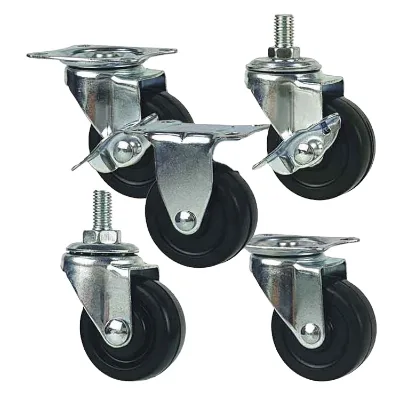
Explore 30 options for light duty swivel caster wheel featuring nylon, PU, rubber, and hard rubber materials. Buyers can compare sizes from 1.5 to 8 inches, brake types, and bearing specifications to find suitable solutions for various applications.
Key considerations
Products List




Comprehensive Sourcing Guide
Strategic Sourcing Guide for Light Duty Swivel Caster Wheels
The global market for light duty swivel caster wheels is characterized by a diverse array of materials, sizes, and functional configurations designed to meet specific operational needs. For procurement professionals, navigating this landscape requires a disciplined approach that prioritizes technical alignment, verified supplier capabilities, and clear cost structures. The following guide synthesizes observed market data and standard industry practices to provide a robust framework for sourcing these critical mobility components.
Technical Specifications and Material Selection
The foundation of a successful caster procurement strategy lies in matching the wheel material and size to the intended load and floor conditions. The current market offers a distinct segmentation based on wheel composition, which directly influences performance characteristics such as noise reduction, floor protection, and load-bearing capacity.
Nylon wheels are frequently specified for applications requiring durability and resistance to chemicals. Available sizes in this category range from 2.5 inches to 5 inches, with a standard surface treatment of zinc plating on the metal components. These units are often available with or without braking mechanisms, offering flexibility for static positioning needs. Conversely, Polyurethane (PU) and Thermoplastic Polyurethane (TPU) wheels provide superior shock absorption and floor protection. PU options are observed in sizes ranging from 4 inches to 8 inches, while TPU variants are available in smaller dimensions, specifically 1.5 inches to 3 inches. Hard rubber wheels, another common category, typically span the 1.5 to 3-inch range and are noted for their high hardness ratings, such as 93A, making them suitable for rougher industrial environments.
Wheel color is another specification variable, with black, grey, white, and blue rubber options appearing in the market. The choice of color often correlates with specific material types or aesthetic requirements in commercial settings. Furthermore, the bearing type is a critical technical differentiator. Ball bearings are standard for smooth rotation in light duty applications, while roller bearings are also available, particularly in models designed for higher stability. The swivel radius, a key geometric specification, varies significantly; observed data indicates radii of 84 mm and 127 mm, which dictate the turning clearance required in tight aisles. Load height is equally critical for equipment integration, with standard configurations observed at 130 mm and 191 mm.
Compliance, Standards, and Certification Verification
When evaluating light duty swivel caster wheels, buyers must verify that products adhere to relevant industry standards and origin requirements. The supply chain for these components is heavily concentrated in China, with specific manufacturing hubs noted in locations such as Dongguang, Guangdong. While specific certification bodies are not universally mandated for all light duty casters, buyers should request documentation confirming that the product standards align with the intended application.
Observed product standards in the market often reference the dimensional range of the caster itself, such as "2.5" to 5" nylon caster" or "4" to 8" PU caster." These descriptive standards serve as a baseline for quality assurance but should be supplemented with specific manufacturer quality management system certifications. Buyers should verify that the surface finish, such as zinc plating, meets corrosion resistance requirements for the operating environment. Additionally, the hardness ratings, such as 75A or 93A, should be confirmed through test reports to ensure the material properties match the supplier's claims.
It is essential to distinguish between generic product descriptions and verified standards. For instance, while a product may be labeled as a "nylon caster," the specific standard governing its manufacturing process and material composition must be explicitly stated in the technical data sheet. Buyers should avoid assuming compliance based solely on the product name and instead demand evidence of adherence to recognized quality protocols.
Cost Drivers and Pricing Structures
The pricing of light duty swivel caster wheels is influenced by a complex interplay of material costs, manufacturing processes, and order volume. The observed market price range spans from $0.10 to $100.00 USD, reflecting the vast difference between small, single-wheel components and larger, heavy-duty assemblies with specialized features.
Material composition is a primary cost driver. Wheels made from TPU or specialized rubber compounds generally command a higher price point than standard nylon or hard rubber alternatives due to the raw material costs and the complexity of the molding process. The inclusion of braking mechanisms also increases the unit cost, as it requires additional mechanical components and assembly time. Furthermore, the bearing type affects pricing; models equipped with ball bearings or roller bearings, such as the 6204zz bearing, typically cost more than those with plain bushings.
Order volume plays a significant role in final pricing. The observed Minimum Order Quantity (MOQ) ranges from 1 to 1000 units. Buyers purchasing small quantities may face higher per-unit costs, while those ordering in bulk can leverage economies of scale to reduce the price. Packaging requirements also impact the final cost; options such as paper cartons, wooden boxes, or standard cartons add to the overall expense, particularly for international shipping. Buyers should request detailed quotes that break down the cost of the wheel, the stem or plate, the bearing, and the packaging to understand the true cost structure.
Typical Applications and Operational Environments
Light duty swivel caster wheels are versatile components used across a wide spectrum of industries. Their primary function is to facilitate the movement of lightweight to medium-weight loads while providing ease of maneuverability. The specific application depends heavily on the wheel material and size selected.
Nylon wheels, with their durability and chemical resistance, are commonly found in light industrial settings, such as assembly lines, tool carts, and laboratory equipment. The 2.5-inch to 5-inch size range makes them ideal for applications where space is limited but smooth rolling is required. PU and TPU wheels, known for their floor-friendly properties, are extensively used in commercial environments like hospitals, schools, and retail stores. The 4-inch to 8-inch PU options are particularly suitable for moving heavy equipment like medical carts or shelving units without damaging sensitive flooring.
Hard rubber wheels are often selected for environments with uneven surfaces or where high load capacity is needed within a small footprint. The 1.5-inch to 3-inch hard rubber casters are frequently used in office furniture, light machinery, and storage racks. The availability of braking mechanisms is crucial for applications requiring stability, such as medical equipment that must remain stationary during procedures or heavy tool carts that need to be secured on inclines. The swivel radius of 84 mm or 127 mm determines the suitability for tight spaces, making these casters essential for warehouse aisles and narrow corridors.
Supplier Evaluation and Sourcing Strategy
Selecting the right supplier is as critical as selecting the right product. Buyers should prioritize suppliers who demonstrate transparency in their manufacturing processes and product specifications. The origin of the product, often China, requires careful vetting to ensure consistent quality and reliable delivery. Suppliers should be able to provide clear information regarding their production capacity, lead times, and quality control measures.
When evaluating potential suppliers, buyers should look for those who offer customization options. The market data indicates that customization is available, allowing buyers to tailor wheel sizes, colors, and mounting configurations to their specific needs. This flexibility is particularly valuable for OEMs and large-scale distributors who require unique solutions. Additionally, suppliers should be able to provide detailed technical drawings and specifications, including load height, swivel radius, and bearing types.
It is important to verify the supplier's ability to meet the required standards and certifications. While specific certification names may vary, the supplier should be able to demonstrate compliance with relevant industry norms. Buyers should also assess the supplier's packaging capabilities, as options range from simple paper cartons to more robust wooden boxes, depending on the shipping requirements. A reliable supplier will offer clear communication channels and responsive customer service to address any issues that may arise during the procurement process.
Quality Control and Long-Term Procurement Considerations
Ensuring the long-term reliability of light duty swivel caster wheels requires a robust quality control strategy. Buyers should implement a system of regular inspections and testing to verify that the products meet the specified standards. Key areas of focus include the integrity of the surface treatment, such as zinc plating, and the durability of the wheel material under load.
Hardness testing is essential to confirm that the wheel material meets the specified ratings, such as 75A or 93A. This ensures that the wheels will perform as expected in the intended environment without premature wear or deformation. Buyers should also verify the bearing performance, ensuring that ball bearings or roller bearings provide smooth rotation and do not exhibit excessive play or noise.
Long-term procurement considerations involve building a sustainable relationship with suppliers who can consistently deliver high-quality products. This includes negotiating favorable terms for repeat orders, establishing clear quality assurance protocols, and maintaining open communication regarding any changes in product specifications or market conditions. By focusing on these factors, buyers can minimize risks and ensure a steady supply of reliable caster wheels for their operations.
Comparative Analysis of Caster Options
To assist in decision-making, the following table summarizes the key differences between the primary caster types observed in the market. This comparison highlights the variations in material, size, and features that buyers should consider when selecting the appropriate product for their specific needs.
| Feature | Nylon Caster | PU/TPU Caster | Hard Rubber Caster |
|---|---|---|---|
| Typical Size Range | 2.5" to 5" | 1.5" to 8" | 1.5" to 3" |
| Material Hardness | Standard Nylon | 75A (PU/TPU) | 93A (Hard Rubber) |
| Surface Treatment | Zinc Plated | Standard | Standard |
| Common Colors | Black | Grey, White, Blue | White, Blue |
| Bearing Type | Ball Bearing | Ball Bearing | Roller Bearing |
| Load Height | 130 mm / 191 mm | Variable | Variable |
| Swivel Radius | 84 mm / 127 mm | Variable | Variable |
| Primary Application | Industrial, Lab | Commercial, Medical | Office, Light Machinery |
This comparative overview underscores the importance of aligning product specifications with operational requirements. By carefully evaluating these factors, buyers can make informed decisions that optimize performance, reduce costs, and enhance the overall efficiency of their material handling operations.
FAQs
What wheel materials are available for light duty swivel caster wheels?
Available materials include nylon, polyurethane (PU), thermoplastic polyurethane (TPU), and hard rubber. Nylon options range from 2.5 to 5 inches, while PU and TPU variants offer sizes from 1.5 to 8 inches depending on the specific model configuration.
Can these caster wheels be customized for specific needs?
Yes, customization is available for these products. Buyers can request specific wheel sizes, colors like black, grey, white, or blue, and mounting configurations to match their unique operational requirements and equipment specifications.
Which bearing types are used in these light duty swivel caster wheels?
The wheels typically utilize ball bearings or roller bearings for smooth rotation. Specific models may feature bearings like the 6204zz, ensuring durability and ease of movement for light to medium load applications in various industrial settings.
How do surface treatments affect the durability of these caster wheels?
Surface treatments like zinc plating are applied to metal components to enhance corrosion resistance. This process ensures the casters maintain structural integrity and appearance over time, particularly in environments where moisture or chemicals might be present.
What are the standard load heights and swivel radii for these units?
Standard load heights observed are 130 mm and 191 mm, while swivel radii are typically 84 mm or 127 mm. These dimensions dictate the turning clearance and equipment integration height required for proper installation and operation.
Where are these light duty swivel caster wheels manufactured?
These products originate from China, with specific manufacturing hubs noted in locations like Dongguang, Guangdong. Buyers should verify the specific factory location when sourcing to ensure alignment with their supply chain and quality expectations.